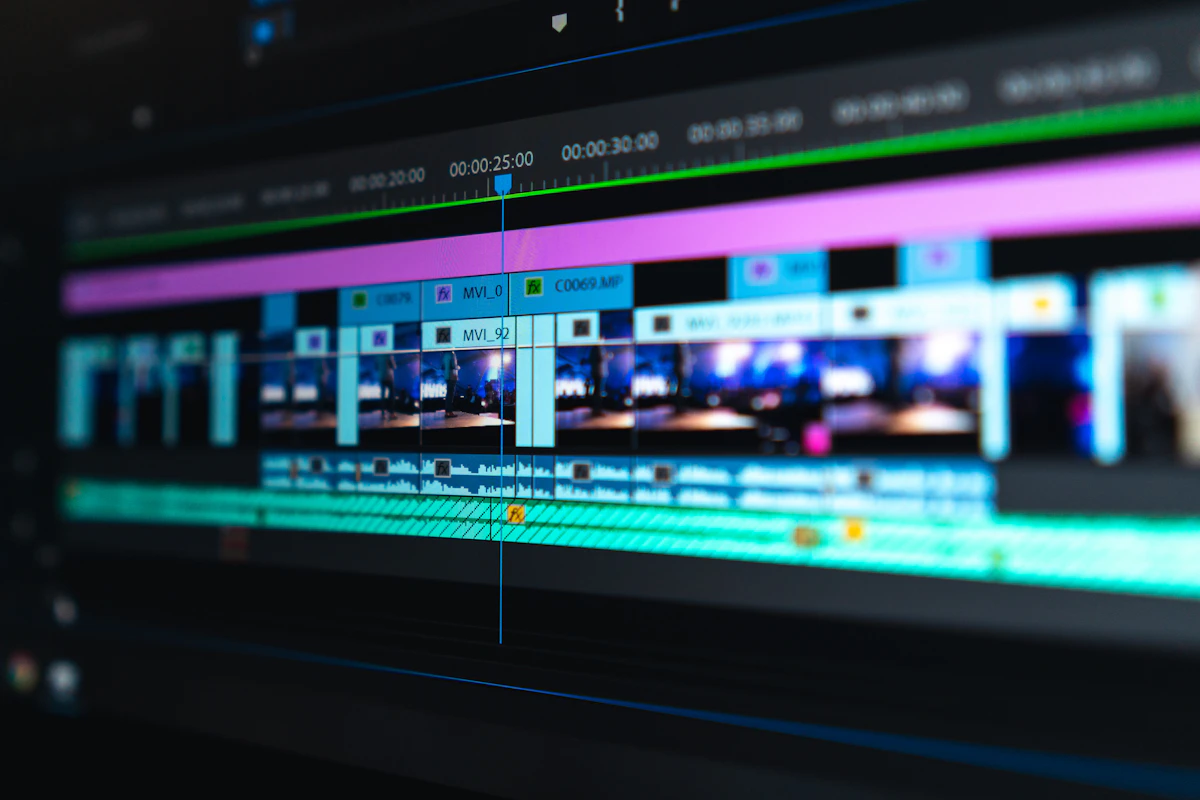
Watch anything tonight, a drama, an advert, a film, and every shot will feel like it belongs to the same world. Same mood, same warmth, same feeling. That isn't luck and it isn't the camera. It's colour grading, and it's probably the least understood stage in video post-production.
In plain terms, grading means adjusting the colour and brightness of every single shot after the film has been edited. That's the whole definition. The interesting part is what it does.
Because without it, your video feels flat, mismatched and vaguely cheap, and most people watching couldn't tell you why.
Correction Comes First
Grading happens in two stages, and the first is really just tidying up.
Most videos are filmed on more than one camera, in more than one room, or across a day where the light keeps changing. Straight off the camera those shots don't match. One's slightly blue, one's slightly orange, one's darker than the rest.
You might not consciously spot it, but you'd feel it. Every cut would give a tiny jolt, like the film keeps clearing its throat.
Correction fixes all of that. White balance sorted so white things are actually white. Skin tones brought back to something human. Brightness levelled out, and every camera matched to every other one. When it's done well, the joins vanish and the video starts to feel like one continuous thing.
Then Comes the Creative Grade
Once everything matches, the interesting stage begins. The creative grade is where the film gets its personality.
Warm and soft for a family-run business that trades on friendliness. Clean and cool for a tech company. Rich and cinematic for a brand film that needs some weight behind it. None of it is random. The look is chosen to support what the film is saying, the same way the music is.
You respond to this every day without noticing. Adverts, dramas, even property videos all use a grade to nudge how you feel. Done well, you never see it working. You just sense that one video feels premium and another feels slightly off, and you can't put your finger on why.
Why Footage Looks Flat Straight Off the Camera
Here's the odd bit. Footage from a professional camera often looks worse, straight off the card, than footage from your phone.
That's deliberate. Your phone grades every clip automatically the moment you shoot it: colours boosted, image sharpened, everything brightened. It looks nice instantly, but those choices are baked in forever, and every phone makes them slightly differently.
Professional cameras do the opposite. They record a flat, washed-out image on purpose, because that flat image holds far more information to work with later. Think of it like a photographic negative: dull to look at, full of potential. The grade is where it gets developed.
How a Grade Supports Your Brand
Your business probably already has a consistent look. Same colours, same fonts, same style of photography everywhere. A grade extends that consistency to video.
When your homepage film, your social clips and your customer testimonials all share the same look, they feel like they come from the same company, because they do. For a local business that people see across a website, social media and maybe a screen at an event, that quiet consistency adds up to feeling established.
It's why, when we build a grade for a client, we keep it. The next film can match the last one, and the one after that. Grading isn't an optional extra we bolt on, either. It's built into every project on our film and video services list.
What Actually Happens in the Grading Suite
Nothing mysterious, though it does involve a lot of sitting very still and staring.
The colourist works at a properly calibrated screen, one that shows colour accurately rather than however a random laptop fancies displaying it. They go through the film shot by shot: correction first, then the look, then a full watch-through to catch anything that jumps out. It's hours of small adjustments that no viewer will ever point to. Which is rather the point. The best grade is the one nobody notices.
If you've ever tweaked a photo on your phone before posting it, you already understand the instinct. This is the same thing done with far better tools, across dozens of shots that all have to agree with each other, in service of how the whole film feels rather than how one picture looks.
Why It's the Last Step
Grading only starts once the edit is locked, for a simple reason: there's no sense polishing shots that might still get cut. So the order of video post-production is always the same. Edit first, then grade, then the sound mix, then delivery.
It's the finishing line. The last thing that happens to the picture before your film goes out the door, and a big part of why it goes out looking like a film rather than footage.
If you've got a video that feels flat, or you're planning one and want it to feel like the real thing, drop us a message. We're happy to explain what a grade would do for your project, no pressure and no jargon.